

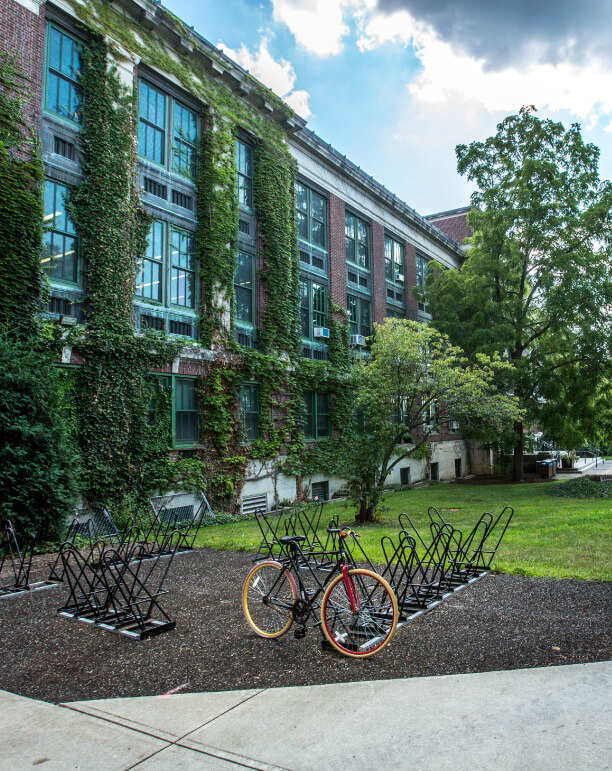













The aim and profile of the BA Architecture program is to train young experts in various fields of Architectural studies, so they can perform in their profession for the needs of the Kosovar society. This program aims to train its candidates in all phases of specific professional activities – including conceptualization of the idea, monitoring and implementation – in the field of architecture and planning.
Mission statement
The mission of the BA program in Architecture is: to provide a high-quality, student-centered education that equips future architects with strong theoretical foundations, practical design skills, and a deep sense of environmental and cultural responsibility. Through innovative teaching methods, architectural research, and active engagement with the community, the program prepares students who are able to address contemporary challenges in the built environment and who contribute to sustainable and aesthetic solutions.
Responsible persons of the study program
Upon successful completion of the professional BA Program in Architecture, students are expected to demonstrate the following knowledge, skills, and competences:
Knowledge
Skills
Competences
Admission to studies
Bachelor studies in BA Architecture have the right to enrol all those candidates who have completed secondary education, possess the necessary documentation, and fulfil the minimum admission criteria determined by the Senate. According to Article 5 of the Regulations for Bachelor Studies, the conditions for admission to Bachelor studies are:
Number of study places
The number of study places according to the decision of the KAA is 150 students per academic year.
Recognition of qualifications
Per the Regulation for Bachelor Studies at AAB College, recognition of qualifications and transfer of studies are governed by Articles 6, 7, and 8 of this regulation. These articles outline the conditions, criteria, and procedures for admitting students from other higher education institutions, the transfer process, and the recognition and equivalence of previously studied courses.
Duration and number of ECTS
Studies in the BA Professional program in Architecture last 3 years (6 semesters) and comprise a total of 180 ECTS, with 60 ECTS per year and 30 ECTS per semester.
Upon completion of the studies, students are awarded the academic title Bachelor of Arts in Architecture.
Employment perspectives
Graduates in Architecture find wide employment opportunities in public and private institutions involved in design, urban planning, and management of the built environment. They can engage in architectural studios, construction companies, municipal and state institutions, as well as in independent creative projects.
A considerable number of graduates from the Architecture program at AAB College have established their own professional studios, contributing to the architectural development of the community and creating new opportunities for the advancement of their careers.
Assessment methods
Assessment includes a combination of summative and formative methods, which aim to measure the achievement of learning outcomes and the continuous progress of students:
Summative methods may include the final exam, presentations, projects, seminar papers, the student portfolio, etc.
Formative methods may include in-class assignments, classroom activities, practical exercises, individual reflections, continuous feedback from the professor, etc.
Student rights
Students at AAB College, in accordance with the Statute and the Regulation for BA Studies, have the right to:
Additionally, students have the right to submit complaints and requests regarding any aspect of the
teaching process, assessment, or any other issues that they believe may hinder their academic
development and well-being while studying at the college.
Student involvement in quality assurance
At AAB College, students are considered equal partners in the design, implementation, and evaluation of
quality assurance processes. They actively participate in every working group or workshop that discusses
policymaking, strategic planning, and decision-making. Specifically, students engage in quality assurance
procedures through the following activities:
.
.