
The EduLab Horizon Project follows the experiences of young people across nine European countries as they transition through different levels of education and into the labour market. Using extensive datasets, expert interviews, surveys, focus groups, and participatory workshops, the project amplifies young people’s own voices as they describe their educational pathways, challenges, aspirations, and choices. The goal is to generate new knowledge that can guide more effective policy-making in response to evolving technological, educational, and labour market dynamics. By the end of 2025, EduLab will publish its first analytical reports, coordinated by Evalag (Germany) and the University of Birmingham (United Kingdom), focusing on educational pathways, transitions, and system-level investments across the EEA.
For Kosovo, being part of this consortium of respected European institutions has been both an honour and a transformative learning experience. Our research team has gained access to advanced methodologies and high standards of academic practice that our partners have refined over many years. Their guidance has, in many ways, “unlocked” our own national potentials, pushed us beyond our comfort zones, and reminded us what rigorous research truly demands. At times, we feel like apprentices learning from master practitioners – absorbing not only their techniques but also their discipline, precision, and commitment to quality.
During the first year, partner teams – supported by the Economica Institute in Vienna and coordinated by the University of Lusofona – have worked intensively on surveys and participatory activities, with hundreds of young people contributing rich insights. This process has required considerable effort. High-quality research demands careful planning, coordination at multiple levels, and thoughtful engagement with partners and participants. EduLab’s participatory approach, particularly in focus groups and workshops, requires a deep and sustained involvement from local teams. As these interactions unfold, the traditional boundaries between interviewer and interviewee or moderator and participant often dissolve, creating a collaborative and meaningful research environment where everyone contributes and learns.
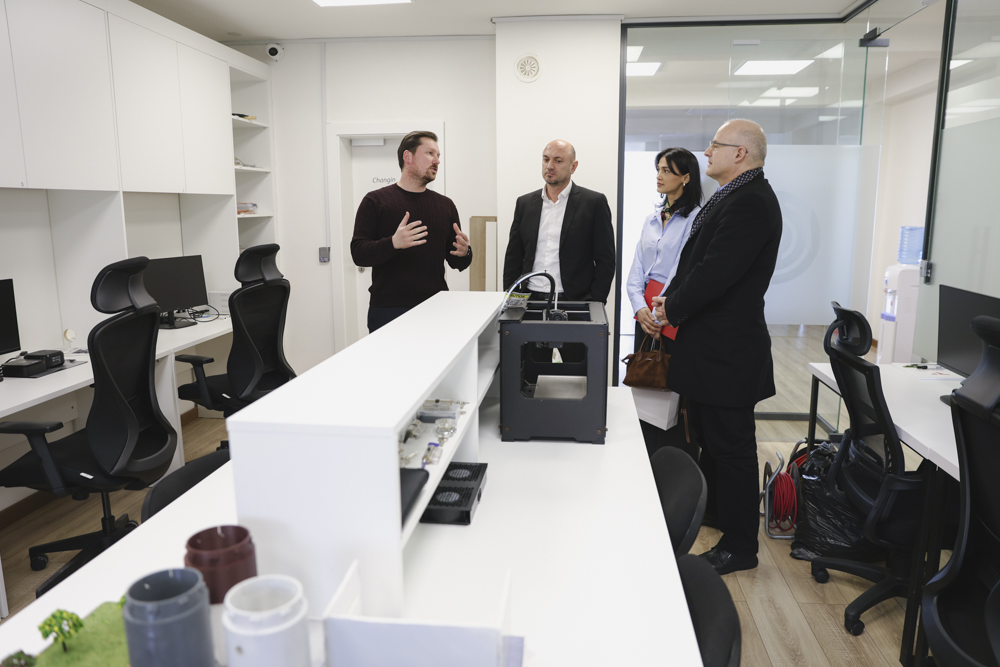
EduLab has also acted as a catalyst for strengthening research at AAB College. Following the local kick-off meeting, we established the EduLab Research Center to advance studies on youth education and employment in Kosovo and the Western Balkans. Within nine months, we conducted three studies involving more than a thousand recent graduates, generating important findings about higher education relevance and labour market outcomes, including calculating Kosovo’s education-to-labour-market mismatch index.
In the months ahead, our team will continue to analyse factors influencing student and system performance, as well as the transition from pre-university education into employment. Particular attention will be given to the participation and challenges faced by ethnic communities, marginalized groups, and students with special educational needs.
We look forward to the final outcomes of EduLab, which will support more effective education policies and youth transitions in Kosovo. The project’s scientific rigor gives us confidence that the Kosovo case will not only benefit national policy development but may also provide insights of value to neighbouring Western Balkan countries. EduLab is also fostering a sustained national dialogue involving industry, institutions, authorities, and youth, while its findings will be disseminated through EU and regional platforms such as Erasmus+, the Western Balkans Fund, and the Regional Cooperation Council. Shared histories and similar challenges across the region create a strong foundation for new initiatives that can build on the knowledge and expertise generated through EduLab.
Project partners: Economica Institute of Economic Research, National and Kapodistrian University of Athens, CeiED at Lusófona University, Evaluation Agency Baden-Württemberg, Bamberg University, AlmaLaurea Interuniversity Consortium, AAB College, Birmingham City University, Maria Grzegorzewska University, University of Graz, Tampere University (TAU)